Conservation agreements can help species return to areas where they had disappeared.Monitoring by Proyecto Vida Silvestre (PVS) shows this is happening with the Blue-billed Curassow and Brown Spider Monkey in Yondó, Antioquia, and Cimitarra, Santander, in Colombia’s Middle Magdalena region. Both species, classified as Critically Endangered, showed a significant increase in their presence onfarms where landowners had set aside portions of their land for conservation.
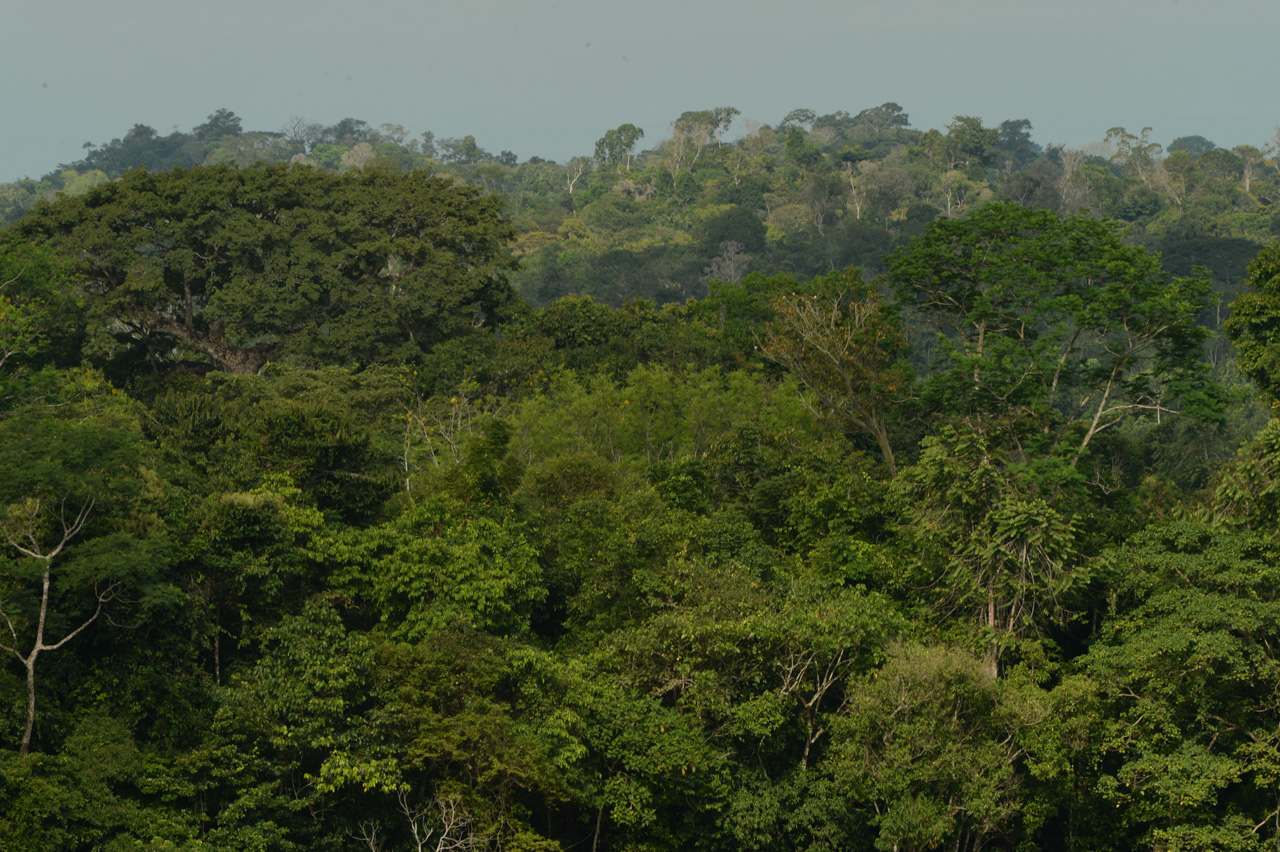 Photo: "EL PATO" Salcedo / WCS Colombia
By Javier Silva
The Blue-billed Curassow (Crax alberti) and the Brown Spider Monkey, also known as the Magdalena spider monkey or choibo (Ateles hybridus), share more than the forests of the Middle Magdalena—a region along Colombia’s Magdalena River—where they live: both species are classified by the International Union for Conservation of Nature (IUCN) as Critically Endangered.
Both the curassow and the spider monkey are affected by similar and unsustainable human activities: the deforestation of their ecosystems to expand agricultural frontiers or urban areas, as well as hunting.
The Blue-billed Curassow,a species endemic to Colombia and found particularly in the Sierra Nevada de Santa Marta and the lower Magdalena River basin, has a small overall population, according to the IUCN, with just over 1,000 mature individuals thought to remain. The species also appears to be declining much faster than its forest habitat, largely because individuals are illegally hunted for their meat. For years, there was even a myth that the bird accumulated tiny particles of gold in its throat, which also led many people to capture it.
The situation is not very different for the Brown Spider Monkey: its populations have declined by 80 percent as a result of habitat loss, according to the IUCN. Many individuals are also hunted for their meat or captured for illegal trade. The species is included on the list of the 25 most threatened primates in the world.
Against this backdrop, however, there are signs of recovery. One can be found in the Middle Magdalena, where Proyecto Vida Silvestre (PVS)* works.
Monitoring showed that, following the decision by landowners between Yondó (Antioquia) and Cimitarra (Santander) to commit to protecting portions of forest within their properties—a commitment known within PVS as a conservation agreement—the presence of both species increased.
Fewer hunters, more curassows
PVS began working in this area in 2014. Initial monitoring showed that across surveyed 100-hectare forest areas, the Blue-billed Curassow was detected in 8 percent of that area.
 Photo: "EL PATO" Salcedo / WCS Colombia
Following the adoption of conservation agreements, that percentage increased. By 2016, the species was detected in 19 percent of the same forest cover. In 2017, the figure had reached 32 percent, and since 2020 it has remained above 34 percent.
The Blue-billed Curassow generally inhabits mature, well-preserved, non-flooded forests. It is also highly sensitive to hunting and tends to disappear when human activity increases in a given area. However, it can return to the same place once the threat is gone. As a result, curassows tend to be more common where human pressure is lower.
In fact, its return to areas it had abandoned in response to threats is equally remarkable.As these areas are protected, the curassow can recolonize them.
“Colonization increases as the areas under conservation increase,” says Leonor Valenzuela, WCS Colombia’s Coordinator of Analysis and Synthesis. She explains that, similarly,on 56 percent of farms where owners had stopped seeing the curassow, the bird returned after conservation agreements were signed. Today, 18,000 hectares in the area are conserved under this approach.
This result is consistent with one of the main conclusions of research conducted by PVS: in the Middle Magdalena, agreements implemented through the end of 2024 increased the likelihood that some species would recolonize properties and reduced the likelihood that they would disappear from them.
It also reinforces the finding that if the Blue-billed Curassows still surviving in Yondó’s largest forest remnants are no longer hunted, the species could have a greater chance of persisting for more than 100 years,according to a study by WCS professionals titled “Evaluation of alternative conservation strategies for the Blue-billed Curassow (Crax alberti) in the Middle Magdalena Valley, Colombia,” published in the scientific journal Oryx.
Protecting the Brown Spider Monkey protects many other species
Although the effect was particularly evident for the Blue-billed Curassow, the figures for the Brown Spider Monkey are also positive. This species requires well-preserved forest, particularly tall trees that allow it to move through the canopy and form groups.
 Photo: "EL PATO" Salcedo / WCS Colombia
Between 2014 and 2015, for every 100 hectares surveyed, the Brown Spider Monkey was detected in only 15 percent of them.
But after conservation agreements began to be signed, that percentage rose to 34 percent in 2016; in 2017 it exceeded 56 percent, and since 2020 it has remained above 65 percent.
The primate also returned to more than half of the farms with conservation agreements. By contrast, the colonization or return of curassows and spider monkeys to properties that were not included in these conservation commitments never exceeded 10 percent.
One of the key conclusions from this work, presented in research by Germán Forero, WCS’s Deputy Director of Science; Leonor Valenzuela; and Carlos Saavedra, the organization’s Species Coordinator, titled “Landscape species as a biodiversity conservation strategy: a quantitative assessment of their effectiveness,” is that conservation agreements can simultaneously address several pressures affecting wildlife: they reduce hunting, protect forest areas, and support their restoration. Their effects can therefore extend beyond any single species.
The species that benefit are not necessarily those that initially motivated conservation actions. Some species that were not the primary target also respond positively. In other words, protecting the forest needed by the curassow or spider monkey can ultimately benefit a large part of the wildlife that shares that territory, the publication notes.
Some of these results were obtained through information from camera traps and 700-kilometer transects, along which areas of approximately 100 hectares were surveyed. This work was carried out with the participation ofFundación Biodiversa Colombia and Fundación Proyecto Primates.
Conservation and production can coexist
Conservation agreements were complemented by the restoration of ecological corridors where forests had become fragmented as the landscape was transformed, mainly by cattle ranching.
Some of the findings from this work, led by Selene Torres, WCS’s Ecological Restoration Lead, were presented in the article “Corridors in highly fragmented landscapes: reconnecting populations of the Critically Endangered Brown Spider Monkey (Ateles hybridus) and sympatric terrestrial vertebrates in the lowland rainforests of central Colombia,” published in the journal Restoration Ecology.
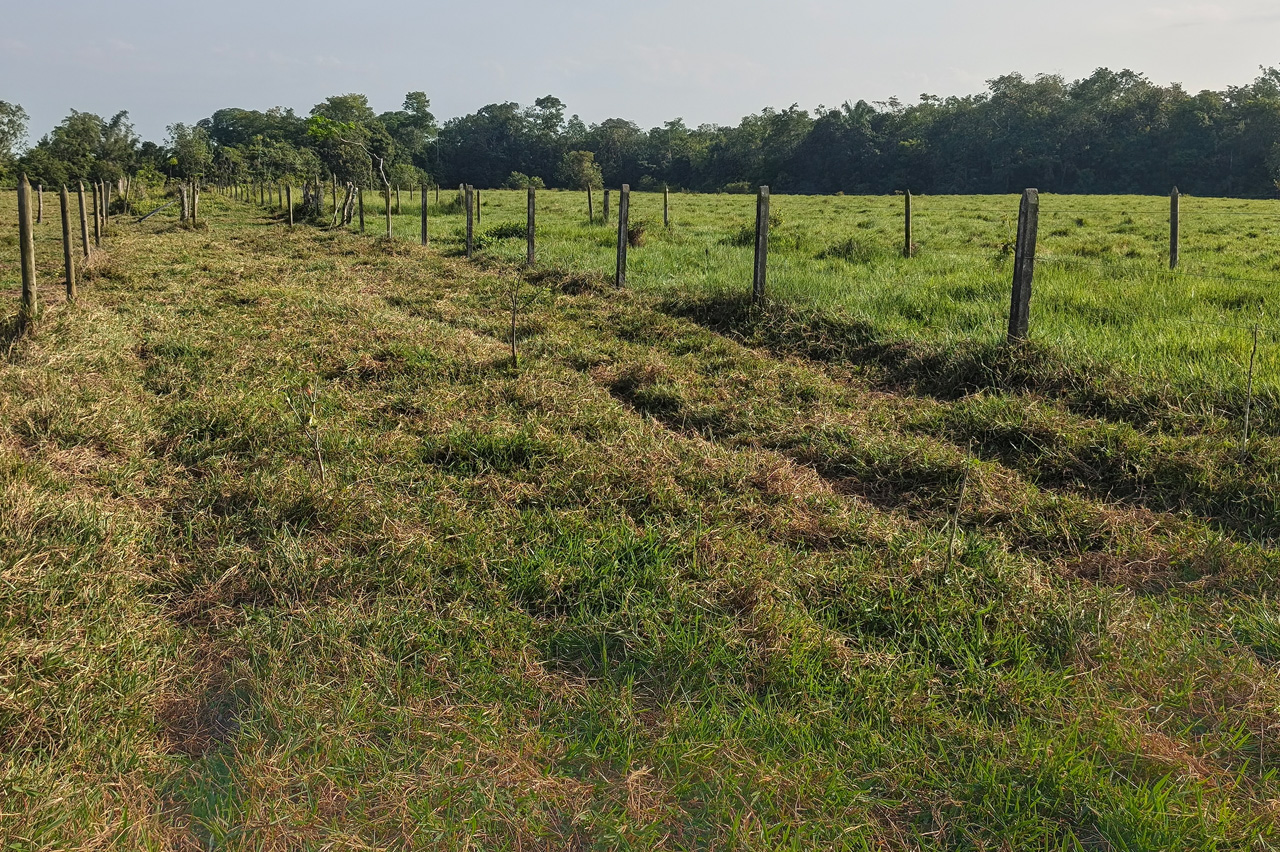 Photo: Maria Angelica Hernandez / WCS Colombia
The study reports that 10 corridors were established in the Middle Magdalena, covering approximately 15 hectares under restoration, and strategically located to connect nearly 1,000 hectares of forest. This showed that large areas do not always need to be restored to reconnect a landscape; strategically located and selected strips of habitat can serve as routes for certain animals.
With the help of camera traps installed in the corridors, 21 of the 32 vertebrate species recorded in the reference forests were detected. These included medium- and large-sized mammals and birds. In the case of the Brown Spider Monkey, restoration was specifically intended to reconnect parts of the landscape that had become isolated.
Another important result emerged at this stage: after four or five years, the corridors no longer showed significant structural differences from the reference forests. This indicates that, under certain conditions in the Middle Magdalena, forest structure can recover within a relatively short period.
Along the same lines, the researchers suggest that corridor restoration can increase wildlife resilience and restore connectivity without undermining local production systems. The aim is not to choose between conservation and agricultural production, but to manage the landscape so that both can coexist.
“It has been demonstrated that working with landowners and communities, based on goodwill and people’s commitment, is worthwhile. The results are remarkable in the best sense and show that it is possible to bring about the changes that are needed,” says Leonor Valenzuela.
Some of the properties whose owners signed conservation agreements included El Silencio, San Bartolo, and Lucitania. Starting this year, PVS will expand this work to other rural areas of Yondó and Cimitarra to continue supporting the survival of these species. The goal is clear: stop hunting them, conserve the forest that remains, and allow species that once abandoned these areas to return.
*Proyecto Vida Silvestre (PVS) is an initiative led by Ecopetrol, Fondo Acción, and WCS Colombia that works to conserve 15 species—12 animal species and three plant species—across three Colombian landscapes: the Eastern Plains (Llanos Orientales), the Middle Magdalena, and the Andean-Amazonian foothills of Putumayo.