In the departments of Guaviare, Caquetá, and Putumayo, associations composed of people who grow cacao, produce honey, and are engaged in the harvesting and processing of non-timber forest products—such as mushrooms, fibers, and fruits like açaí, camu-camu, and copoazú—are promoting greater awareness among women and young people of their rights to speak up, work, and lead enterprises and productive processes. This is happening within a historically patriarchal society influenced by armed conflict.
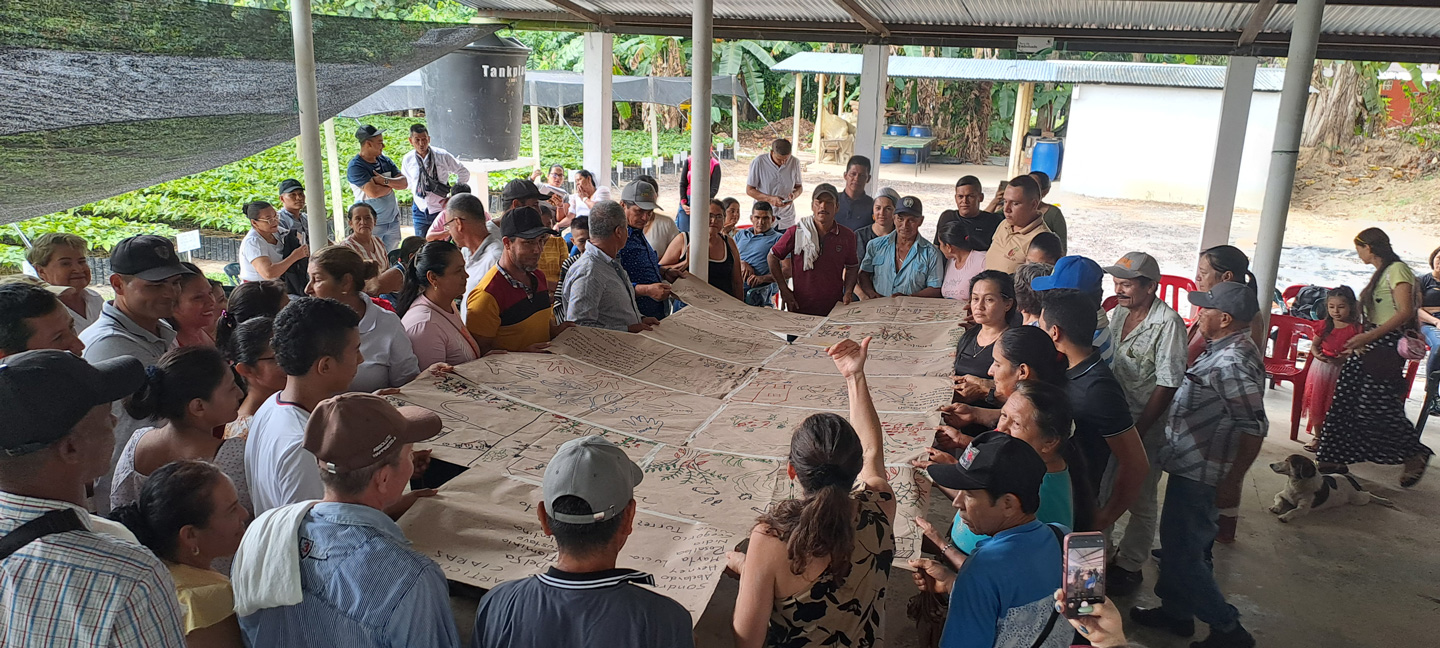 Photo: Manuel Rico - Rainforest Alliance
By Javier Silva
Jeniffer Yara describes herself as a hardworking person who depends on the land. Her struggle, she explains, has recently focused on supporting her mother, Luz María Juajiboy, in honey production in the rural area of Mocoa. She has just over four hives of stingless bees (meliponines), which she cares for many hours a day, as part of the effort to sell this product and achieve a better quality of life for her family.
She, a young woman with an open mind, has no doubt that the path she has taken—learning from the land and its benefits—has been the right one.
Not long ago, as a beneficiary of the Andean-Amazonian Meliponiculture Association (AMAA), and during meetings held between 2025 and this year with members of this organization, Jeniffer heard two words for the first time that gave her a new perspective on her life: gender equity.
Sometimes, people have two options when facing the unknown: either they forget it, assuming they do not need it, or they embrace it and strive to make it exist. She chose the second alternative. Now she talks about respect, about avoiding discrimination and mistreatment, and about demanding change in how she has long been treated—change that can also benefit her two young daughters.
“I didn’t know I had rights, or certain rights. And because I didn’t know them, I didn’t realize they had been violated,” she says.
That moment when Jeniffer embraced new knowledge that calls for fair treatment– but also promotes that women and men have the same opportunities to make decisions, access training, and develop socially—emerged as part of the activities of the Resilient Amazon Landscapes (REAL) project, whose impact has focused on municipalities in Putumayo, Caquetá, and Guaviare.
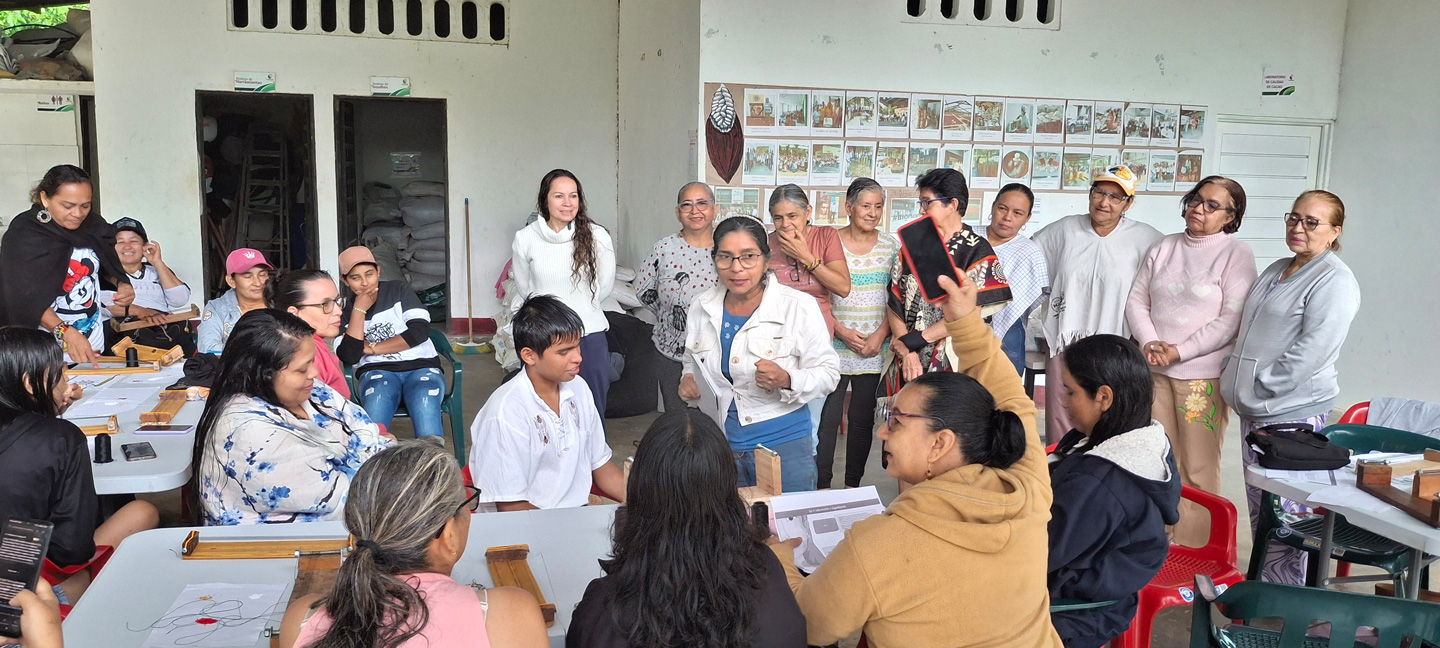 Photo: Manuel Rico - Rainforest Alliance
“Zero-deforestation” products
REAL is driven by a critical environmental goal: to promote agricultural practices for cacao production and those based on harvesting and processing non-timber forest products—including oils, fruits such as açaí, copoazú, and camu-camu, as well as edible mushrooms, medicinal plants, fibers, vines, and seeds used in handicrafts—that are compatible with the conservation of the Amazon.
In these departments, located in one of the most biodiverse regions in the world, there is intense agricultural expansion and frequent forest clearing (in the Amazon alone, 68 thousand hectares were cleared in 2024, according to the Institute of Hydrology, Meteorology and Environmental Studies, Ideam).
These activities lead to the introduction, with little control, of new crops; hectares are also opened for extensive cattle ranching and illegal infrastructure works. This phenomenon generally affects communities that have chosen sustainable economic alternatives as a way to achieve their livelihoods, because their resilience (capacity to adapt to adverse situations) is gradually reduced.
For this reason, REAL has committed to mitigating these impacts, with funding from the United Kingdom (UK PACT) and the work of a consortium of organizations such as Rainforest Alliance, WCS (Wildlife Conservation Society), and Agrobiz (a firm in charge of the business management of some agricultural products), together with eight linked rural associations: some cacao producers (Asoprocao, Asoprocaf, Comcap, Comicacao, and Asoprocacao), others dedicated to promoting non-timber forest products such as Ayakuná and Asoproagro, and AMAA, focused on honey production.
The aim, then, is for cacao harvests to be “zero deforestation,” that is, achieved without cutting down trees. There is also a constant promotion of systems such as agroforestry, which improves sustainability without expanding cultivated areas. This allows cacao to be grown within or alongside tree-rich environments (agroforestry system) rather than on cleared land. Over time, crops could become more resilient to climate change and better withstand climate variability.
Perhaps one of the greatest contributions is that, with each of these practices, products improve their quality, can be classified as sustainable, and, at the same time, more easily access competitive markets. In this way, buyers and consumers can trace the origin of these products and verify that their production has indeed respected forests.
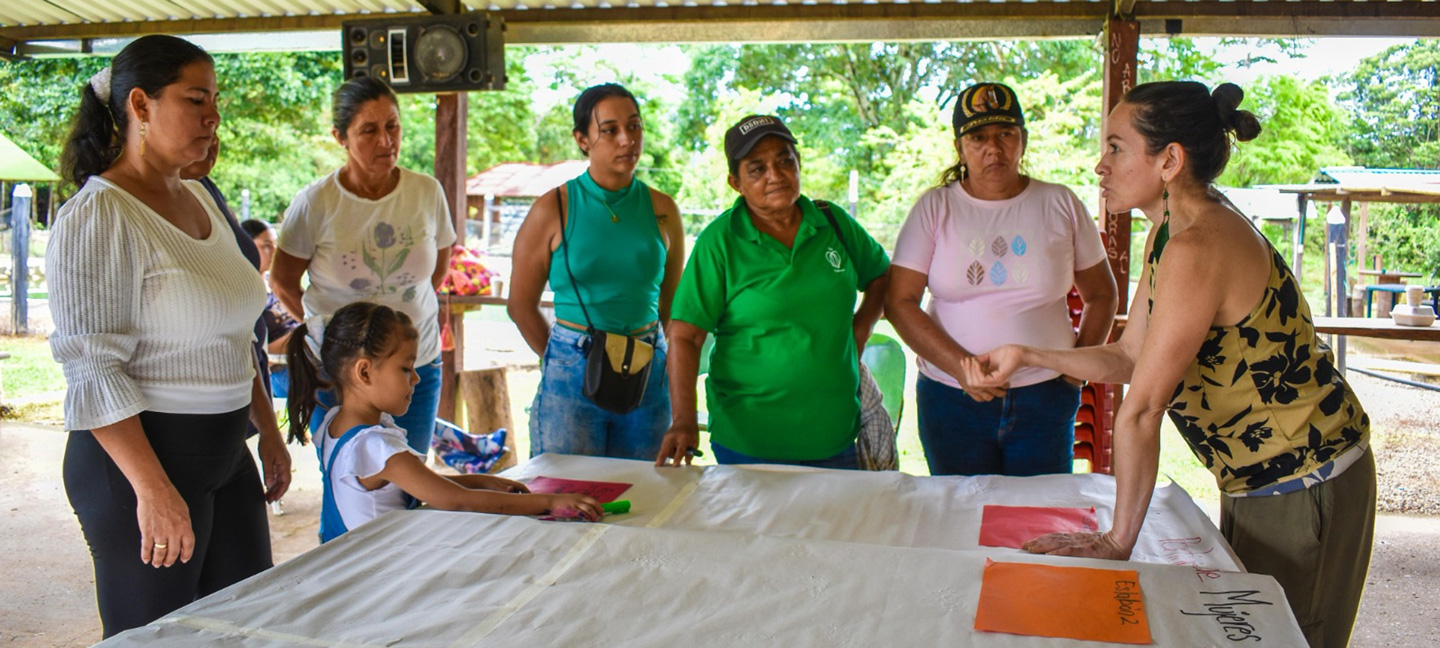 Photo: Rainforest Alliance
Sowing without cutting, speaking without fear
The work is not isolated. That is why, step by step, a broad territory is impacted to link production, conservation, and urgent social well-being, in an environment with communities that have few training opportunities, low participation in decision-making, and a lot of informal work that is sometimes not fairly paid, and where a patriarchal culture has historically been established, also affected by armed conflict.
To help address these social challenges, environmental conservation efforts have been complemented with workshops and training to transform how decisions are made (governance) and the adoption of equity and inclusion protocols led by committees working within the associations and supported by their boards of directors. These spaces have opened new opportunities for those who make up the committees—especially women and youth—to actively participate in decision-making.
Lina María Caro, Sustainable Landscapes Coordinator at WCS Colombia, explains the emergence of new opportunities for social, productive, and commercial participation within cacao value chains, along with strategic alliances to strengthen their impact. She also highlights the importance of increasingly robust and effective leadership in decision-making processes.
Natalia Andrade, REAL project lead in Putumayo, explains that before the initiative, some associations had not prioritized gender issues.
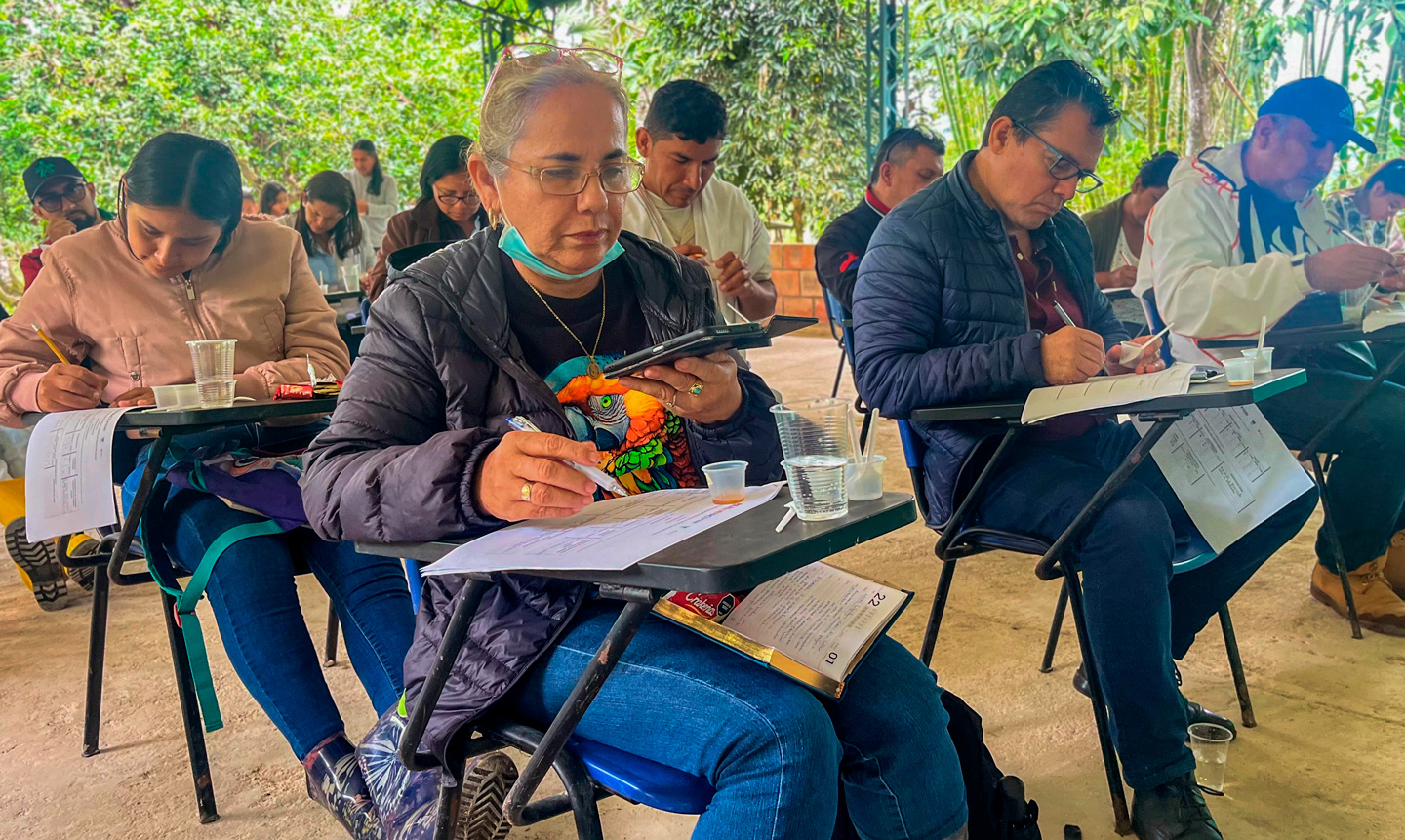 Photo: WCS Colombia
-That is why we proposed the creation of committees in each association composed of men, women, youth, and older adults. From these, thematic areas emerged and were incorporated into a protocol under the GEDSI framework (Gender Equality, Disability, and Social Inclusion), which has been developed through training workshops-, says Natalia.
One of them is equity and violence prevention. The others, she adds, aim to promote leadership by taking into account the voices of women and men and strengthening skills for public speaking and participation skills; to promote more inclusive decision-making processes within associations; to encourage economic autonomy and access to opportunities, with equitable participation in value chains and access to markets; and to promote a more equitable distribution of work and shared responsibility at home, so that cultural change is generated.
Jeniffer Yara believes that understanding her rights has helped her family recognize her value as a woman, the importance of her voice, and her ability to stand firm.
When relationships with some people have become difficult, I have chosen to step away. These decisions are based on my rights, which must be respected and which benefit family stability,” she explains. She has also learned that other women heading households in rural Mocoa have experienced domestic violence but, unlike her, have not received support.
Other women say that, thanks to this experience and ongoing training, they now participate more confidently in discussions within their organizations.
“Before joining this committee and receiving guidance, I was very shy—extremely shy. I was afraid to speak up, even when I felt I might be right. It was hard to raise my hand and express my ideas for fear of being wrong,” says Bessi Ximena Cortés, from the COMICACAO association in San Vicente del Caguán (Caquetá).
“Through the workshops, I’ve learned to speak in different spaces and share my opinions with greater confidence. I’ve also gained knowledge about issues I wasn’t aware of before, as my focus used to be mainly on farm activities like cattle management,” she adds.
REAL has even encouraged youth participation in political spaces. For example, Dánier Andrade, from Valle del Guamuez (Putumayo) and a member of ASOPROCAF, was elected by popular vote to the Municipal Youth Council.
“Before, due to lack of knowledge, we didn’t know how to achieve political inclusion, and we were unaware of the rights that would allow us to do so. Now we are empowered, and we understand the importance of young women, older adults, and the role each of us plays in society,” he says.
But how can people who grow cacao and sell honey or transform forest products—now having an increasingly participatory role and with products already identified as sustainable—achieve greater economic stability?
Here, Agrobiz plays a key role. While Rainforest Alliance trains farmers in sustainable production and certification standards, and Wildlife Conservation Society (WCS) leads the ecological and scientific approach, identifies key conservation areas, and defines areas to be protected, Agrobiz is the business component of the consortium: it designs business models to connect producers with buyers.
“We look for clients, mainly in Europe but also nationally, who value and are willing to pay a premium for high-quality products with traceability systems that certify ‘zero-deforestation’ production, as well as for the social progress surrounding these value chains,” says Hernán Jiménez, co-founder of Agrobiz.
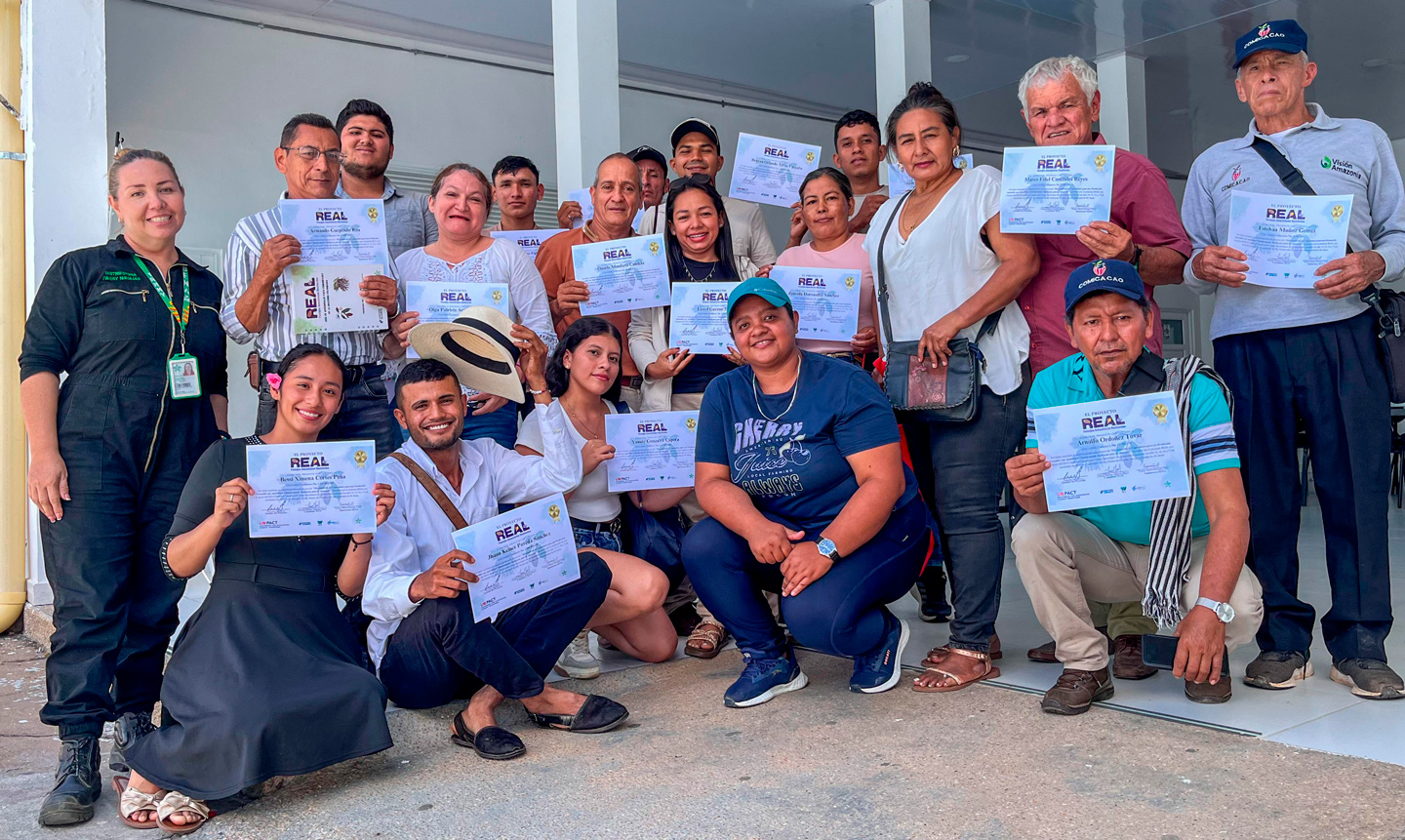 Photo: WCS Colombia
He notes that the most critical factors for market access are proving that crops are not linked to deforestation and that land tenure is legally established. Social progress under the Equity and Social Inclusion Protocol now provides an additional boost. Once that stage is achieved, the next step is ensuring high product quality.
“In short, we are strengthening the resilience of communities in this Amazonian landscape. By supporting sustainable agriculture, we believe more buyers will trust this process—that is our bet,” he concludes.
Thus, in territories where for years many voices were not heard, change may not first be measured in hectares conserved or tons sold. Instead, something less visible may begin to make the difference: women and young people raising their voices, and communities making decisions for their own future.