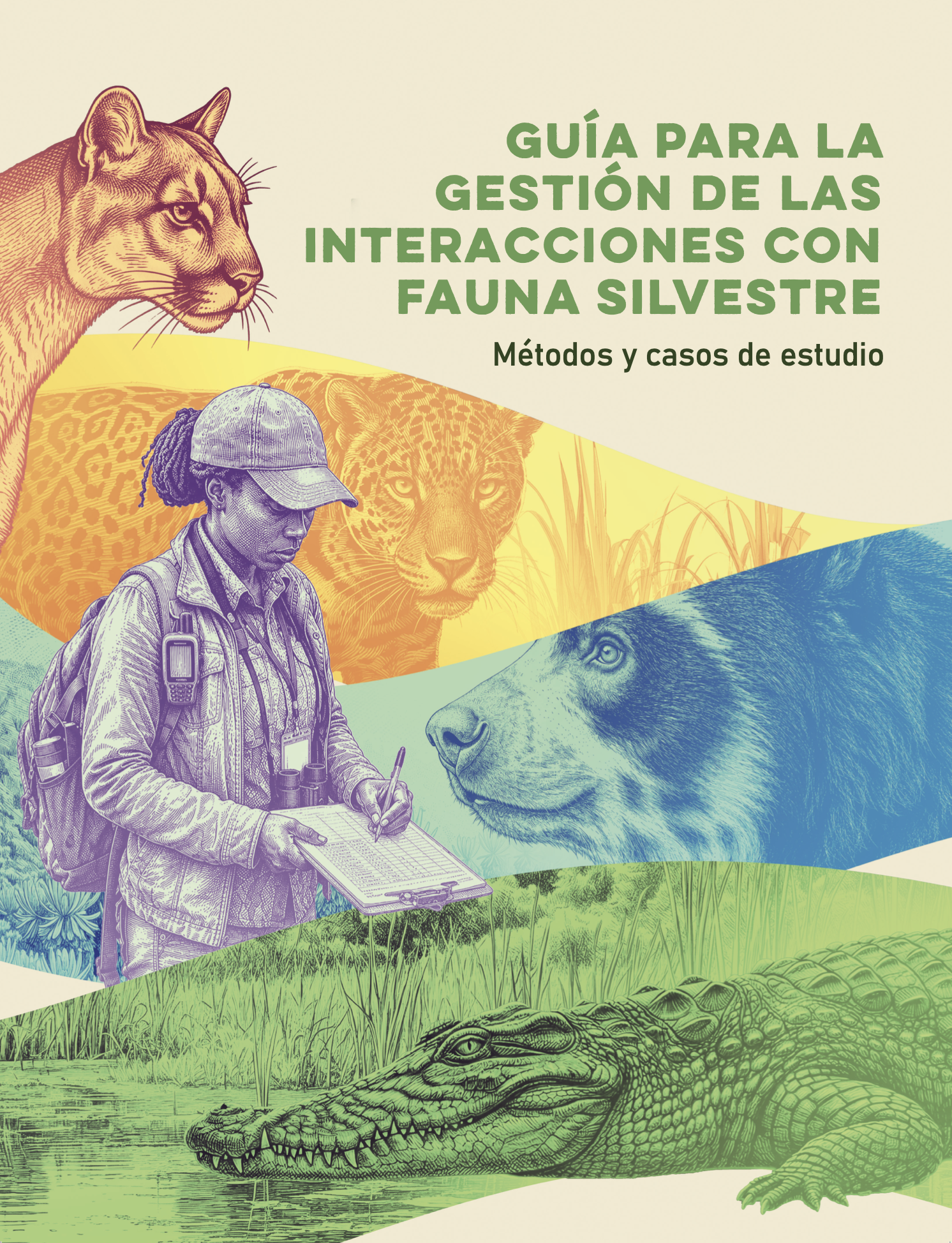
The newly released Guide to Managing Human–Wildlife Interactions: Methods and Case Studies proposes a shift in how we understand relationships between people and wildlife. Rather than offering quick fixes to prevent conflicts with jaguars, pumas, or bats, it provides a roadmap for understanding these interactions, incorporating community knowledge, and developing solutions.
By Javier Silva
In some places, pumas are part of local traditions and collective memory. Seeing one can be a cause for celebration. In other areas, however, an unexpected sighting is enough to create uncertainty.
This is what Alfredo Pinto describes. He lives in Colombia’s La Cuchilla del San Juan Regional District for Integrated Management (DRMI), which connects the Tropical Andes with the Chocó biogeographic region. A few months ago, a puma came to his farm in the rural area of Pueblo Rico, Risaralda, and returned for several days, roaming the property, investigating its surroundings, and attacking his animals.
“First it killed a young mare and then a mare—the young one's mother,” Alfredo recalls. “Both helped me transport supplies and farm products between the farm and the road that leads to town. I was left without any animals.”
In other communities, a puma may not be the animal that causes fear or anger. It could be an Orinoco crocodile recently released into a river, or an Andean bear moving among crops.
Although these events occur, or could occur, in different regions, they all raise the same question: how can we share our territories with wildlife in a way that works for everyone?
For a long time, many responses have focused on conflict: identifying the animal causing the problem, trying to reduce the threat it poses, driving it away, or even hunting it.
The Guide to Managing Human–Wildlife Interactions: Methods and Case Studies, recently published by WCS Colombia, proposes a different approach: understand the situation and plan before taking action. This means asking what is happening, who is affected, how communities perceive the situation, and what consequences it has for both people and animals.
“When we focus on conflict, the question is usually what we need to reduce or prevent. When we think about coexistence, we also ask what we need to build and maintain so that people and wildlife can share a territory over the long term,” says Silvio Marchini, one of the guide's authors and a specialist in the human dimensions of conservation, conflict, and coexistence between people and wildlife.
From this perspective, Marchini adds, people's well-being is no longer a secondary consideration.
“Productive practices, local knowledge, relationships of trust, and institutional responses are all part of conservation. Coexistence does not mean that all damage or disagreements disappear. It means creating the conditions and capacities to manage them without compromising the future of people or wildlife,” he explains.
There Are No Magic Formulas
Not all interactions between people and wildlife are conflicts. They can be positive, negative, or neutral, depending on the context and on how the people who share a territory experience them.
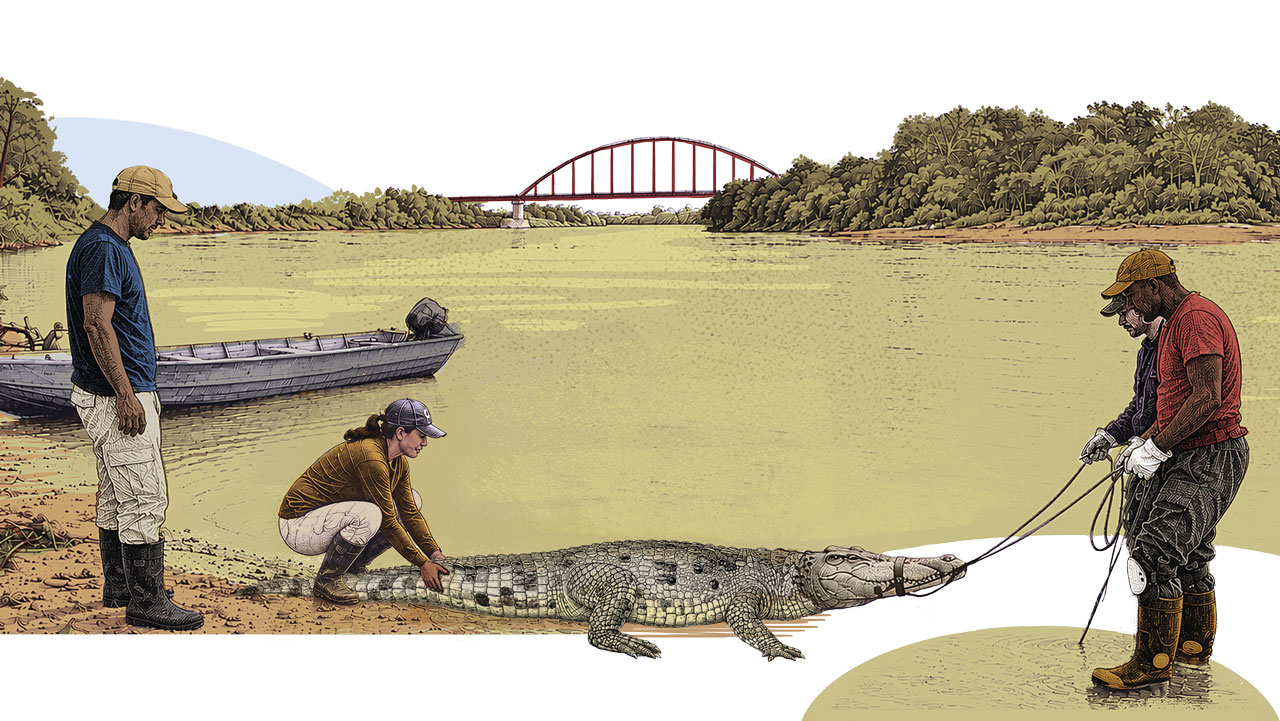
A case involving the Orinoco crocodile, addressed through the Proyecto Vida Silvestre (PVS), in which Ecopetrol, Fondo Acción, and WCS participate in partnership with National Natural Parks of Colombia (Parques Nacionales Naturales de Colombia), helps illustrate this. In Cravo Norte (Arauca), communities have a long history of living alongside this species, as the area is home to Colombia’s largest wild population. By contrast, in the Tomo River and Caño Terecay in Vichada, individuals of this reptile have been reintroduced since 2015, and relationships with local communities are still taking shape.
 Ilustration: Guillermo Torres / Punto Aparte Editores
For Camila Durán, a wildlife specialist at WCS Colombia who has experience working with this crocodile, this difference is one of the process's main lessons.
“Rather than applying a magic formula, strategies must begin with an understanding of the histories, contexts, and needs of each territory,” Camila says.
The guide is built around this principle. Its six steps—assessing interactions, planning, selecting indicators, agreeing on actions, implementing them, and monitoring their results—are designed to adapt to the social, productive, and ecological characteristics of each place.
That means listening to communities. People know the trails, which animals appear, when they appear, where encounters take place, and what happens as a result. The guide recommends documenting these experiences using tools such as the Human–Wildlife Interaction Diagram.
For Camila, incorporating this knowledge changes how strategies are designed: it helps identify the causes of interactions, understand people's perceptions of different species, and develop actions together with communities.
The aim is to bring this perspective together with scientific knowledge. Laura Jaimes, a mammal specialist at WCS Colombia with experience in coexistence initiatives involving large cats, explains that jaguars offer a useful example of this complexity because they can evoke conflicting feelings: fear or frustration, but also admiration for their beauty and strength. Jaguars may prey on domestic animals—from fish and chickens to dogs, cattle, and horses—causing financial losses and emotional distress. Yet many people also want jaguars to continue living in their territories.
“Biological monitoring gives us only part of the picture,” Jaimes says. That is why the guide's methodology combines ecological indicators, such as wildlife population status, with indicators related to people, including losses and tolerance.
In the case of the jaguar, it is not enough to know whether it continues to use a territory. We also need to understand what is happening to the people who live alongside it. Livestock losses may leave a community less willing to tolerate the animal. Alternatively, fewer predation events may help people become more willing to coexist with it.
Manuel Rodríguez, WCS's Andes–Chocó landscape leader, explains that in the La Cuchilla del San Juan DRMI, for example, 122 surveys helped identify negative interactions between wild cats and livestock production. Families then took part in planning for their own properties and developed a vision of the kind of farm they wanted to create to support coexistence.
This process was subsequently led by the Corporación Autónoma Regional de Risaralda (CARDER), the regional environmental authority, and supported by the implementation of the DRMI management plan. It resulted in 29 conservation agreements tailored to the conditions of individual properties. Measures included improvements to fences and corrals, wildlife deterrents, sustainable production practices, and stronger institutional responses.
Although Alfredo Pinto still remembers the loss of his animals with sadness, he now recognizes that the agreements and improvements to his farm infrastructure have made a difference. His new horses have a safe place to stay, and he also produces organic fertilizer through vermiculture, using manure from the animals he has replaced. He has also received training as a tourism guide.
“Look at it this way: what started badly has turned into something very good for me. The puma arrived, but with it I began to receive all these blessings. Now I want to know where it is, whether it is still moving around here, and whether there is one or more than one. That's why I'm waiting for someone to help me catch it… with cameras, of course!” he says.
Tolerance Toward the Andean Bear
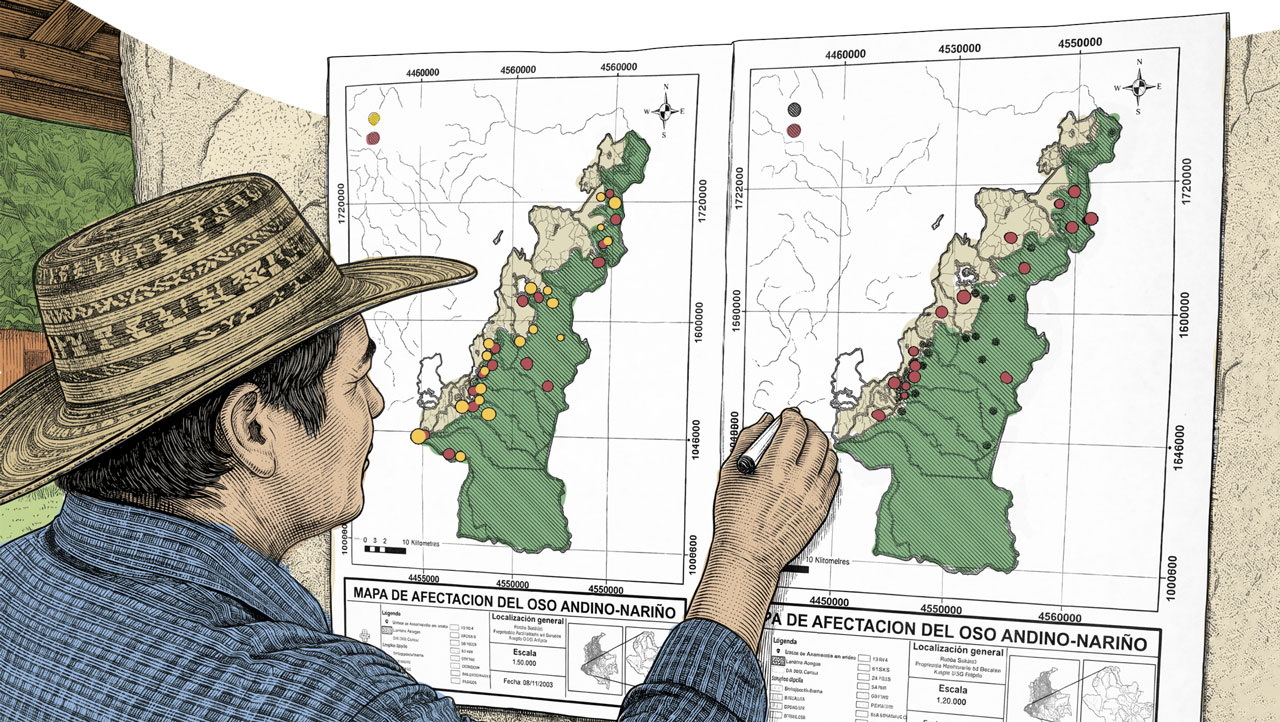
Another example shows this transformation through numbers. The Conservamos la Vida program, based on the Andean Bear Conservation Strategy and nvolving National Natural Parks of Colombia, Fundación Grupo Argos, Smurfit Westrock, and the regional autonomous corporations of Valle del Cauca (CVC), Cauca (CRC), and Quindío (CRQ), has promoted coexistence through voluntary agreements with farming families in Cauca, Valle del Cauca, Quindío, and Nariño. Under these agreements, families set aside part of their land for conservation in exchange for incentives that support sustainable production.
 Ilustration: Guillermo Torres / Punto Aparte Editores
Monitoring revealed changes both in the species and among people. Andean bear occupancy increased from 52% in 2015 to 76% in 2021, in association with agreements with landowners, protected areas, and habitat restoration. Tolerance toward the species also increased: according to the index used, it rose from 0.75 in 2017 to 1.31 in 2022, a change associated with people's perceptions of the benefits of coexistence and their appreciation of the bear.
Something else changed, too: reported damage. The initial assessment, conducted in 2015, recorded four predation events attributed to Andean bears on four properties. By the time monitoring was carried out in 2021, no damage had been reported.
For Marchini, these figures illustrate the difference between counting a project's activities and demonstrating its results. Workshops, agreements, and newly built corrals show what was done; evaluation helps establish what changed. That is why the guide recommends social and ecological indicators, along with a baseline against which progress can be tracked and strategies adjusted.
Bats That Became "Educators"
In the village of Villa Claret, Risaralda, also within the La Cuchilla del San Juan DRMI, another remarkable case stood out, this time because of how unusual it was.
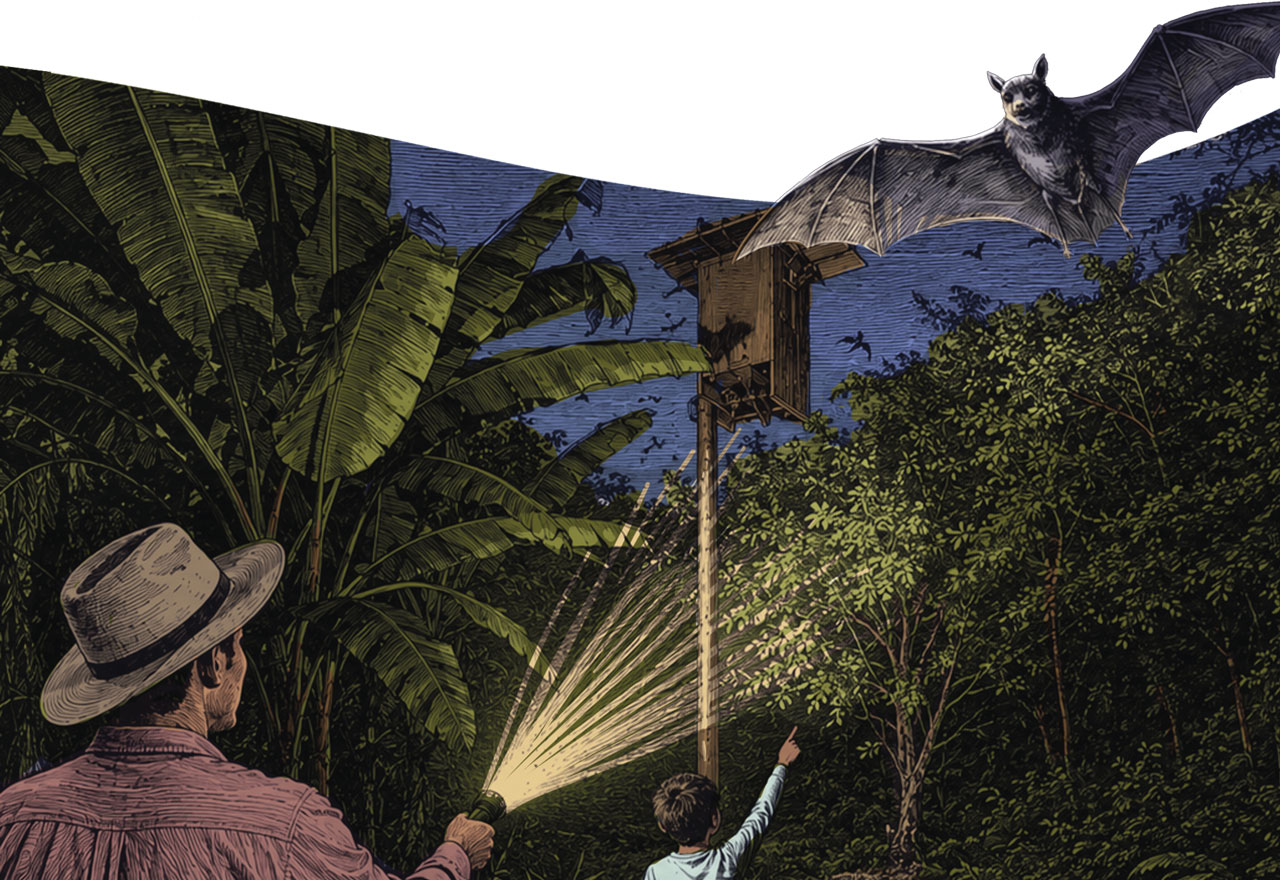
Nearly a thousand bats had taken up residence in the Bienestar Rural School, San Pablo campus, which had been temporarily abandoned during the COVID-19 pandemic. When the facilities were needed again, the response was not to eliminate the colony. Instead, artificial roosts were installed nearby to relocate the bats gradually, alongside environmental education activities. This addressed a human need—restoring the use of the school—without turning the bats into the enemy.
 Ilustration: Guillermo Torres / Punto Aparte Editores
For Marchini, experiences involving such different species offer an important lesson: the tools can be shared, but the measures must be adapted to each context. Cases involving pumas, bears, bats, and eagles show how wildlife management is connected to productive practices and people's livelihoods.
Germán Forero, Scientific Director of WCS Colombia, believes this is one of the publication's main objectives. The guide is intended for community leaders, environmental authorities such as National Natural Parks and regional autonomous corporations, and decision-makers. However, he emphasizes that it should not remain on the shelves of the offices responsible for wildlife management.
“People who live alongside wildlife should be able to use this document to plan, identify problems, agree on actions, and keep negative impacts and conflicts at acceptable levels.”
Germán adds that coexistence strategies must also be aligned with existing land-use planning instruments. Municipal land-use plans (POTs, by their Spanish acronym), development plans, and other planning tools should be considered when designing actions. In other words, the goal is to move beyond putting out fires and build the capacity to anticipate problems.
Germán also warns that this shift requires a deeper change in perspective: understanding that coexistence does not mean the absence of negative interactions.
“When people and wildlife share a territory, encounters will continue to occur, and their nature may change over time. There are no ready-made formulas. Each case requires an understanding of how people perceive these interactions and how they affect both communities and wildlife. That is why we need a roadmap to mitigate negative interactions and strengthen positive ones. The guide is not presented as the end of a process, but as a tool whose true value will have to be demonstrated in the communities and landscapes where it is applied,” he says.
Communities Have the Final Say
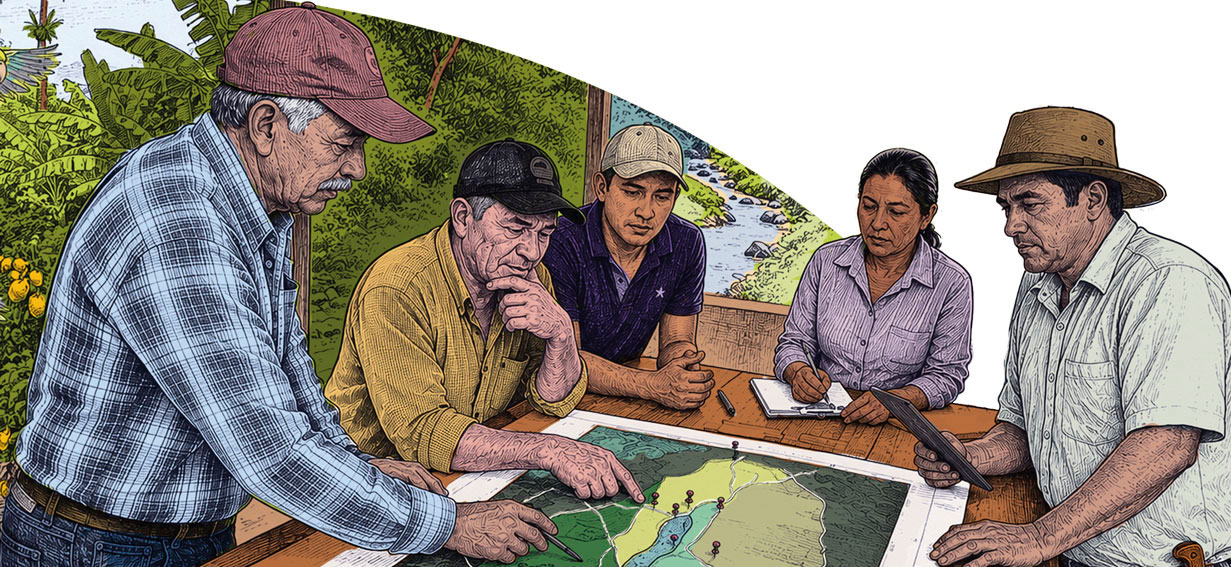
Camila Durán also identifies a challenge: ensuring that the guide becomes a resource that communities can make their own, both as an information source and as a practical management tool for their territories. To achieve this, people need to identify with the examples and situations it presents and see its recommendations as actions they can put into practice in their daily lives.
 Ilustration: Guillermo Torres / Punto Aparte Editores
Marchini makes a similar point. Coexistence initiatives can last much longer than the projects that initially set them in motion. Technical measures need maintenance, agreements need follow-up, and relationships of trust require a sustained presence. Support is also needed for the people who connect communities with institutions, facilitate agreements, and help put them into practice.
Participation must not become a way of shifting the entire responsibility onto communities. They already have knowledge, skills, and initiatives of their own, but they need resources and institutional support.
Laura Jaimes puts it another way: communities are the ones who ultimately remain in these territories. An organization can build a corral, provide materials, deliver training, or propose a measure to reduce jaguar attacks. But it is the people who live there who will decide whether to maintain that strategy, modify it, or try another approach.
Coexistence does not necessarily mean that a jaguar will stop approaching a farm, that a crocodile will never appear in a river, that bats will never return to occupy a building, or that bears will disappear from local trails. It means that when these animals appear again, the response no longer has to begin with fear or confrontation.